
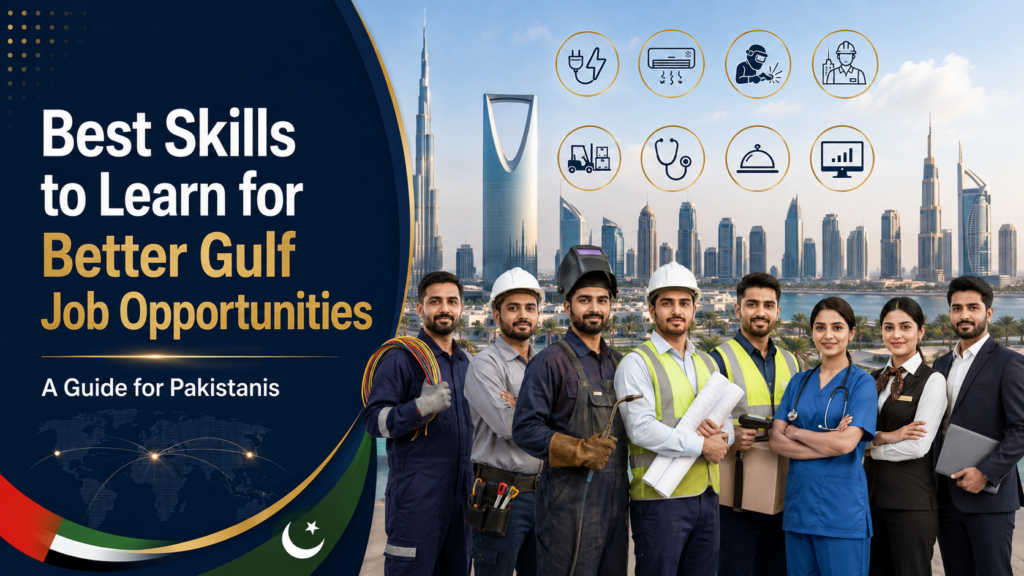
For Pakistanis, working in Saudi Arabia, the United Arab Emirates, Qatar, Oman, Bahrain or Kuwait is a good chance to gain international experience and build a better financial future.
However, Gulf employers do not select candidates only because they are willing to work abroad. Gulf employers normally look for candidates who have the right skills, practical experience and the ability to perform their duties professionally.
The Gulf job market is changing as Gulf countries invest in construction, logistics, tourism, healthcare, technology, manufacturing and renewable energy.
Saudi Vision 2030 focuses on the growth of sectors such as tourism, industry, logistics and the digital economy. The UAE’s long-term development plans also focus on technology, knowledge, sustainability and future skills through plans such as We the UAE 2031.
For Pakistani candidates, learning the right skill before applying can improve their chances of getting a better Gulf job. Here are some useful skills to consider.
1. Electrical and Technical Trade Skills
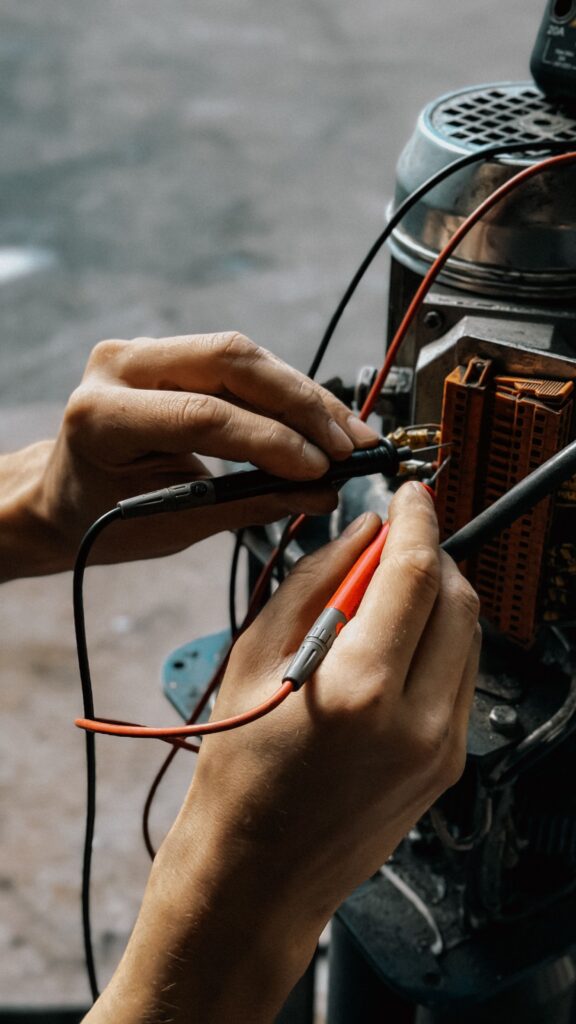
Electricians are needed in buildings, commercial areas, factories, construction projects and industrial sites.
Common electrical jobs include:
- Building electrician
- Industrial electrician
- Electrical technician
- Electrical maintenance technician
- Electrical supervisor
- Auto electrician
Pakistan’s National Vocational and Technical Training Commission lists qualifications for general electricians, industrial electricians, electrical supervisors and auto electricians.
Candidates should learn more than basic wiring. Useful practical skills include:
- Reading electrical diagrams
- Installing electrical systems
- Finding faults
- Using electrical testing tools
- Following workplace safety rules
- Maintaining electrical equipment
Electricians may need to pass a practical trade test before selection. Candidates should not list any skill on a CV that candidates cannot perform during a trade test.
Suggested internal link: [How to Prepare for a Gulf Job Trade Test]
2. HVAC and Refrigeration Skills
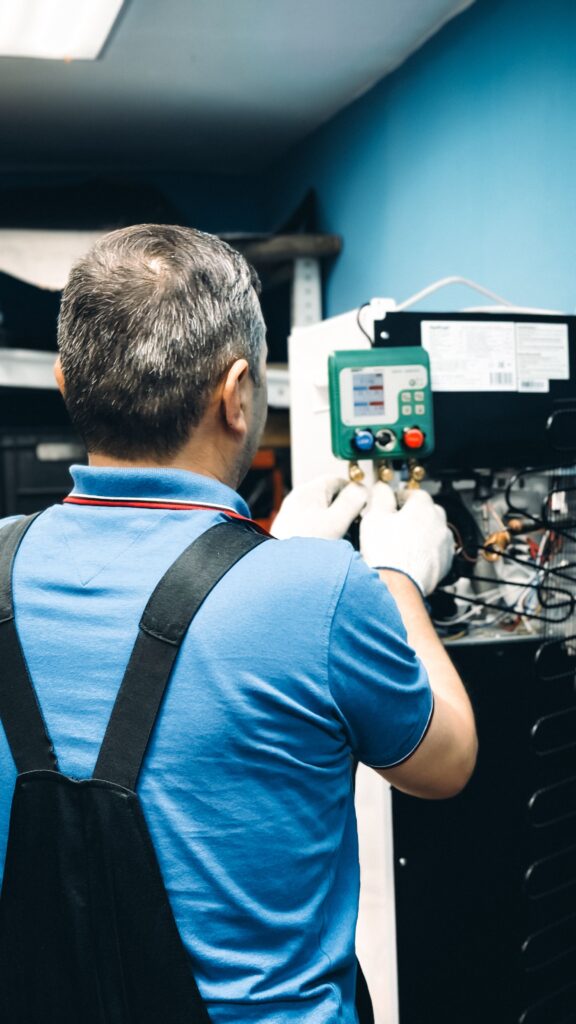
Heating, ventilation and air-conditioning systems are important in Gulf countries because of the hot weather.
HVAC technicians may work in hotels, shopping malls, offices, homes, hospitals and industrial buildings.
Important HVAC skills include:
- Air-conditioning installation
- Regular maintenance
- Refrigeration-system repair
- Fault checking
- Electrical control systems
- Gas charging
- Reading diagrams
- Workplace safety
NAVTTC’s Takamol Skill Verification Program includes HVAC mechanics among the trades covered by its listed assessment centres.
Pakistan’s official overseas employment portal also publishes vacancies for different jobs, including HVAC-related jobs.
A training certificate can improve a candidate’s profile, but practical experience is still important.
3. Welding, Plumbing and Pipe-Fitting Skills
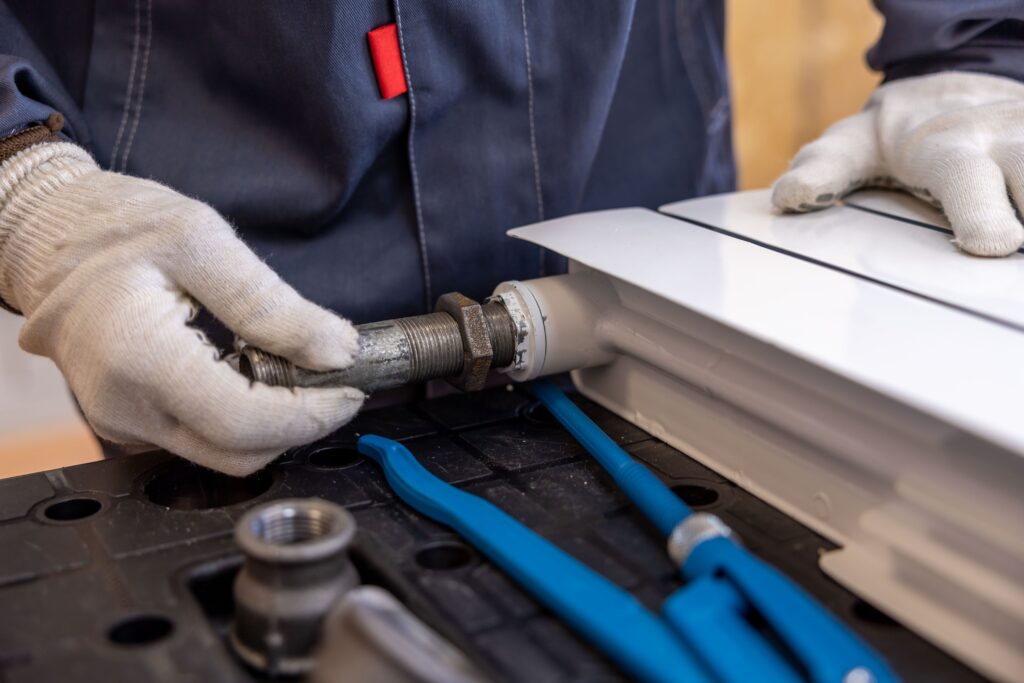
Welders, plumbers and pipe fitters work in construction, manufacturing, maintenance, oil and gas, shipyards and industrial projects.
Useful welding skills include:
- Arc welding
- MIG welding
- TIG welding
- Structural welding
- Pipe welding
Plumbers and pipe fitters should understand:
- Pipe installation
- Reading measurements
- Water-supply systems
- Drainage systems
- Pipe repair
- Pressure testing
- Safe tool handling
These trades are included among the jobs listed under NAVTTC’s Takamol Skill Verification Program.
Requirements can be different for each employer. Candidates should check whether a job requires a particular welding method, trade certificate or level of experience.
Suggested internal link: [Documents Required for Gulf Job Applications]
4. Construction and Building Skills
Construction remains an important source of employment in Gulf countries. Jobs may be available for skilled workers and site-support workers.
Useful construction skills include:
- Masonry
- Carpentry
- Steel fixing
- Scaffolding
- Tile installation
- Painting
- Plastering
- Shuttering and formwork
- Equipment operation
- Site supervision
Candidates with technical education may also benefit from learning:
- AutoCAD
- Revit
- Building Information Modelling
- Quantity estimation
- Primavera P6
- Microsoft Project
- Reading construction drawings
NAVTTC’s official qualifications database includes vocational programmes in construction, electrical work, mechanical technology, AutoCAD and equipment operation.
Construction candidates should prepare for practical tests and learn how to use personal protective equipment correctly.
5. Health and Safety Skills
Safety knowledge is useful in construction, manufacturing, logistics, energy and industrial workplaces.
Depending on their education, certificates and experience, candidates may apply for jobs such as safety assistant, safety supervisor or safety officer.
Important safety skills include:
- Finding workplace hazards
- Risk assessment
- Fire safety
- First aid
- Emergency response
- Using personal protective equipment
- Working safely at height
- Confined-space safety
- Permit-to-work systems
- Incident reporting
Candidates must remember that completing a short safety course does not automatically qualify a candidate for a senior safety position.
Some employers require international certificates and several years of site experience.
Before paying for training, candidates should confirm which qualification is required for the target job.
Suggested internal link: [How to Check Whether a Gulf Job Offer Is Genuine]
6. Driving and Heavy-Equipment Operation
Transport, logistics and construction companies need drivers and equipment operators.
Possible jobs include:
- Light-vehicle driver
- Heavy-truck driver
- Bus driver
- Forklift operator
- Mobile-crane operator
- Excavator operator
- Wheel-loader operator
NAVTTC provides training material for jobs such as LTV and HTV driving, mobile-crane operation and heavy-equipment operation.
Candidates should develop skills in:
- Safe driving
- Vehicle inspection
- Basic vehicle maintenance
- Route planning
- Safe loading and unloading
- Equipment safety
- Traffic rules
A Pakistani driving licence may not allow a person to work as a professional driver in another country.
Local licence rules, driving tests and employer requirements are different in each Gulf country.
7. Logistics and Warehouse Skills

Saudi Arabia’s National Industrial Development and Logistics Program focuses on the development of industry, mining, energy and logistics.
The UAE also has a large transport and trade network that supports logistics and warehouse work.
Possible jobs include:
- Warehouse worker
- Inventory assistant
- Forklift operator
- Packing worker
- Storekeeper
- Dispatch coordinator
- Logistics assistant
Useful warehouse skills include:
- Inventory management
- Stock counting
- Packing and labelling
- Using barcode scanners
- Warehouse safety
- Shipping documents
- Microsoft Excel
- Enterprise resource planning systems
Pakistan’s Bureau of Emigration and Overseas Employment publishes overseas vacancies for warehouse, driving, technical and other job categories.
Vacancies change regularly. Candidates should check recent job listings instead of depending on old advertisements.
Suggested internal link: [Complete Gulf Job Application Process]
8. Hospitality and Customer-Service Skills
Hotels, restaurants, shopping centres, tourism companies and service businesses need employees who can deal with customers professionally.
Common hospitality jobs include:
- Waiter
- Barista
- Cook
- Housekeeper
- Receptionist
- Kitchen helper
- Cashier
- Customer-service representative
Saudi Arabia’s Quality of Life Program supports the development of tourism, entertainment, culture and related activities.
Growth in these areas may create supporting job opportunities. However, available jobs depend on employer requirements and local employment rules.
Useful hospitality skills include:
- Customer-service manners
- Food hygiene
- Housekeeping standards
- Complaint handling
- Point-of-sale systems
- Professional grooming
- Spoken English
- Basic Arabic
- Teamwork
In hospitality jobs, a candidate’s attitude and presentation can be as important as training.
9. Healthcare and Caregiving Skills

Hospitals, clinics, rehabilitation centres and home-care providers may offer jobs to qualified healthcare professionals and support workers.
Useful healthcare skills include:
- Nursing
- Medical laboratory technology
- Physiotherapy support
- Elderly care
- Patient assistance
- Infection prevention
- Medical documentation
- First aid
- Basic life support
Saudi Arabia’s Health Sector Transformation Program includes improvements in hospital services, primary care, emergency response and digital healthcare.
Healthcare is a regulated profession.
Pakistani qualifications may need verification, professional registration, examinations or licensing from the relevant authority in the destination country.
Candidates should always check the official licensing requirements before applying.
Suggested internal link: [Medical and Visa Requirements for Gulf Employment]
10. Computer and Digital Skills
Digital skills are useful for office, accounting, logistics, customer service, marketing and technology jobs.
Useful digital skills include:
- Microsoft Word
- Microsoft Excel
- PowerPoint
- Data entry
- Email communication
- Accounting software
- Digital marketing
- Graphic design
- Web development
- IT support
- Cybersecurity
- Data analysis
- Customer relationship management systems
Candidates applying for office jobs should learn how to create documents, manage spreadsheets, use formulas and prepare reports.
Candidates applying for IT jobs should create a portfolio containing real projects.
Saudi Arabia’s National Transformation Program includes digital development as an important part of the country’s growth. The UAE also shares information about digital skills and future plans on its official government website.
11. English and Basic Arabic Communication
Good communication can help candidates perform better during job interviews and at work.
English is widely used in companies where employees come from different countries. Basic Arabic can help in customer service, retail, driving, security and site-based jobs.
Candidates should practise how to:
- Introduce themselves
- Explain their work experience
- Understand workplace instructions
- Report a problem
- Ask job-related questions
- Read safety signs
- Write simple work messages
- Understand common workplace words
Candidates do not need perfect English for every job, but candidates should understand instructions related to their work and safety.
Suggested internal link: [Gulf Job Interview Questions and Answers]
12. Professional and Workplace Skills
Technical knowledge is not the only thing that matters. Employers also want workers who are reliable and professional.
Important workplace skills include:
- Being on time
- Taking responsibility
- Being honest
- Working with others
- Managing time
- Solving problems
- Adjusting to change
- Speaking respectfully
- Following instructions
- Being willing to learn
During an interview, candidates should give examples of how candidates took responsibility, solved a problem or worked with a team.
How to Choose the Right Skill
The best skill is not always the most popular skill. The right skill should match a person’s education, work experience, physical ability, interests and target job.
Before joining a training course, ask:
- Is this skill needed for jobs that are available now?
- Does this skill match my current experience?
- Is the training provider recognized?
- Does the course include practical work?
- Can the certificate be verified?
- Can I perform this skill during a trade test?
- Does the destination country require another licence?
Candidates can check the NAVTTC short-course directory for vocational training options in Pakistan. Candidates should also check recent job listings on the BEOE foreign-jobs portal before choosing a course.
How to Prepare for a Gulf Job
After learning a useful skill, candidates should:
- Prepare a professional CV.
- List only real skills and work experience.
- Organize educational and employment documents.
- Obtain certificates that can be verified.
- Practise interview questions.
- Prepare for a practical trade test.
- Check passport validity.
- Check medical and licensing rules.
- Read the employment contract carefully.
- Verify the employer and recruiter.
Candidates using a recruitment agent should check whether the agent has a valid Overseas Employment Promoter licence. Licence details are available through Pakistan’s Bureau of Emigration and Overseas Employment.
Common Mistakes to Avoid
Pakistani job seekers should avoid:
- Taking courses that do not match job requirements
- Buying certificates that are not recognized
- Claiming skills they cannot show
- Sending the same CV for every job
- Submitting incomplete documents
- Ignoring communication skills
- Accepting unclear job terms
- Paying money without checking the recruiter
- Believing that a course guarantees a job or visa
Training can improve a candidate’s chances of getting a job. However, no course or recruiter can honestly promise a job, visa or final selection.
The final result depends on available jobs, employer decisions, candidate eligibility, interviews, document checks, licensing rules and government approval.
Conclusion
Pakistani candidates can improve their chances of getting Gulf jobs by developing technical skills, communication skills, safety knowledge and professional behaviour.
Electrical work, HVAC, welding, plumbing, construction, driving, logistics, hospitality, healthcare and digital skills can support different career paths.
Candidates should choose a skill that matches their background and the real requirements of the target job.
The best way is to get proper training, gain practical experience, prepare correct documents and apply through verified channels. A skilled and well-prepared candidate has a better chance of getting a genuine Gulf job.
Meta title: Best Skills to Learn for Gulf Jobs for Pakistanis
Meta description: Learn about useful technical, digital, vocational and communication skills that can help Pakistani candidates improve their Gulf job opportunities.
Suggested URL: /best-skills-for-gulf-jobs-for-pakistanis/
Suggested internal links to add:
- How to Apply for Gulf Jobs from Pakistan
- Common CV Mistakes to Avoid for Gulf Jobs
- Documents Required for Gulf Employment
- Gulf Job Interview Preparation Guide
- How to Identify Fake Gulf Job Offers
- Complete Gulf Recruitment Process